JP Morgan’s Bold $10 Billion Commitment to Space and National Security Technologies
In the wake of October’s space week, JP Morgan unveiled an ambitious $10 billion investment strategy aimed at bolstering sectors vital to U.S. national security. This initiative spans cutting-edge fields such as nanomaterials, autonomous robotics, solar energy, and notably, spacecraft development and space launch capabilities.
Space: From Emerging Frontier to Established Investment Arena
JP Morgan’s focus on space-related technologies marks a pivotal recognition of space as a viable and lucrative investment domain. While sectors like artificial intelligence, quantum computing, and nuclear fusion continue to generate excitement, their commercial maturity remains years away. In contrast, the space industry is rapidly evolving into a mature market, with innovations steadily advancing and the global space economy projected to surge from over $600 billion today to nearly $1.8 trillion annually within the next decade.
Capital Market Challenges in Supporting Space Growth
Donald Moore, CEO of the Space Finance Company and a space policy expert at the University of Michigan, emphasizes that for the U.S. space sector to fully realize its potential, it requires a sophisticated financial ecosystem. This includes a balanced mix of venture capital, private equity, streamlined government contracts, debt financing, and structured financial instruments tailored to space ventures.
U.S. Policy Ambitions vs. Investment Realities
The recent Executive Order on Ensuring U.S. Space Superiority highlights the administration’s commitment to fostering a dynamic commercial space economy. The goal is to attract over $50 billion in private space investments by 2028, leveraging the power of American free enterprise. However, a noticeable gap persists between these policy aspirations and the actual flow of capital into the space sector.
China’s Strategic Leap in Space Industry Development
Contrasting with the U.S., China approaches the space economy with a markedly different mindset. Chinese authorities forecast the space economy could balloon to an astonishing $10 trillion by 2050, a figure grounded in tangible progress and strategic investments.
Advancements in Reusable Rocket Technology
After years of limited progress, reusable rockets have emerged as a cornerstone for unlocking space’s economic potential. While SpaceX currently dominates the global launch market, accounting for approximately 86% of annual launches, China is rapidly closing the gap with its own reusable rocket programs, which now demonstrate reliability comparable to their American counterparts.
China’s Expanding Space Achievements
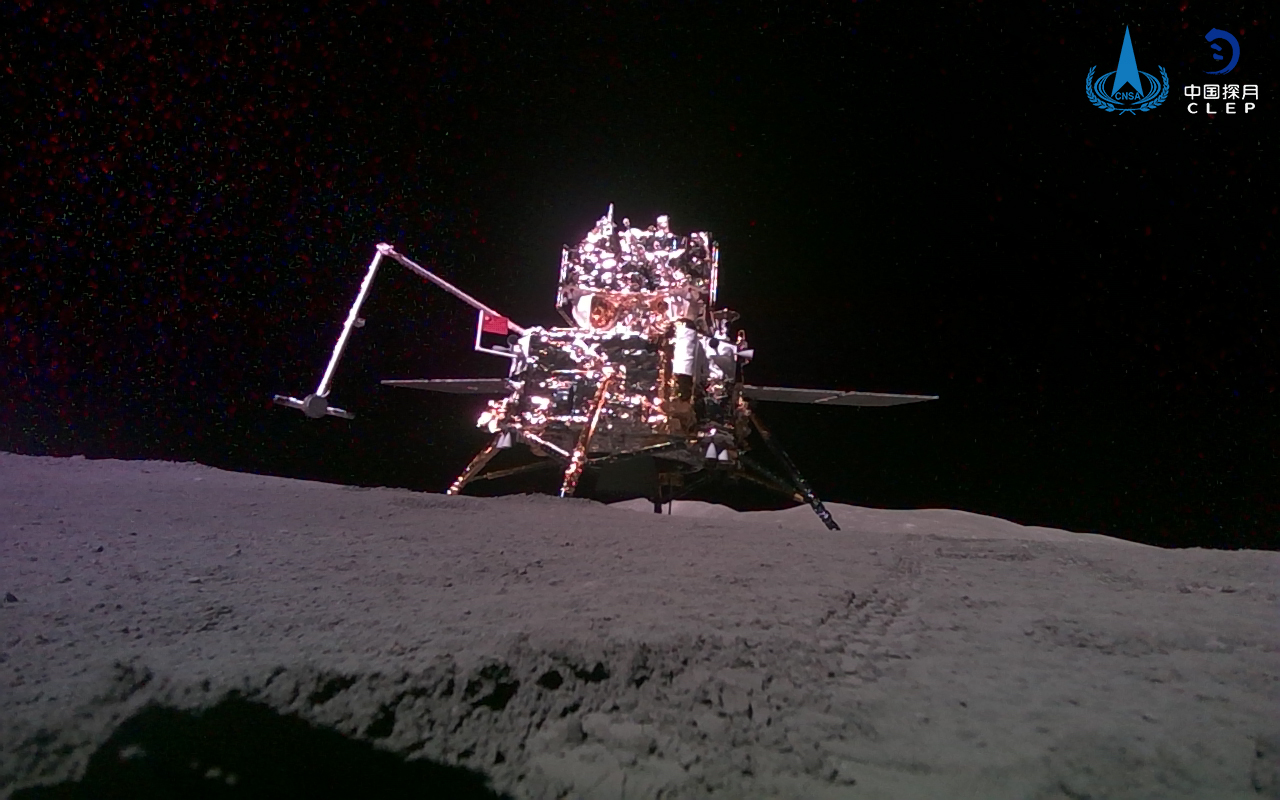
China’s space milestones are impressive: it remains the only nation to have landed on the Moon’s far side, has deployed an AI-powered supercomputing satellite constellation, successfully operated a Mars rover, and established its own crewed space station. This decade-long, methodical approach, combined with cost-effective launch capabilities, positions China to capitalize on commercial ventures such as space-based refineries and manufacturing facilities.
Exploiting Space Resources: China’s Vision for the Future
China views space not just as a frontier for exploration but as a vast resource reservoir. The lunar surface harbors helium-3, a rare isotope with potential applications in nuclear fusion and quantum computing. Additionally, asteroid mining offers access to abundant supplies of platinum-group metals and rare earth elements critical for advanced technologies. China is actively pursuing large-scale space resource extraction, aiming to strengthen its dominance in strategic minerals.
In-Space Manufacturing: The Next Industrial Revolution
Beyond mining, China is pioneering inflatable lunar factories designed for large-scale production in space. These facilities aim to manufacture high-quality semiconductors, pharmaceuticals, and massive structures unattainable through Earth-based launches. Meanwhile, U.S. companies like Redwire, Varda, and Axiom are securing early contracts in in-space assembly and manufacturing (ISAM), signaling growing American participation in this transformative sector.
The High Stakes of Space Leadership
Our recent analysis in Space Shock: 18 Threats that Will Define Space Power underscores the critical need for the U.S. to invest between $335 billion and $620 billion over the next decade to maintain leadership in the burgeoning space economy. Achieving this requires a unified vision among investors, capital markets, and policymakers to develop a robust financial infrastructure supporting space as an industrial domain.
Financing Space as Industrial Infrastructure
As space evolves into a foundational industrial platform, its financing must mirror that of traditional infrastructure sectors. This entails expanding beyond venture capital to include debt financing, insurance markets, and long-term contracts facilitated by supportive government policies. Historical parallels can be drawn from early aviation and railroads, where government anchor customers and private capital combined to build scalable, financeable assets.
Global Competition: The Risk of Losing the Space Economic High Ground
If U.S. capital markets fail to adapt to the unique demands of space industry financing, China is poised to seize the strategic and economic advantages of this new domain. Over the past 50 years, limited progress in space investment led many to overlook its potential. Today, with the space economy having doubled in size over the last decade and projected to reach trillions by mid-century, the race is on for American companies to capture this value before Chinese state enterprises dominate.