Enhancing Solar Resilience: Insights on Extreme Weather, Module Design, and Robotics
Frank Oudheusden, a leading voice in solar technology, recently shared his expertise on the resilience of photovoltaic (PV) systems under severe weather conditions. His insights stem from the influential “Solar Under Storm” white paper series, published between 2017 and 2025, which investigates how solar installations withstand natural disasters like hurricanes. This research has been particularly impactful in regions such as the Caribbean, where regulatory frameworks for PV modules are less developed.
Oudheusden highlights that the initial white paper has amassed over five million downloads, underscoring its significance as a go-to resource for areas lacking stringent PV standards. A notable case study from this research is the Mayreau solar farm, a 100kW installation built following all twelve recommendations from the series. In 2024, Mayreau endured Hurricane Beryl, providing invaluable real-world data on hurricane impacts on solar arrays.
“Academic test beds rarely experience multiple extreme events, but ours did,” Oudheusden remarks. This rare occurrence offers a unique opportunity to analyze failure modes and extract lessons that can inform both small-scale and utility-scale projects. He stresses the importance of proactive innovation, noting that the industry often reacts only after damage has occurred.
Rethinking Load Distribution in Solar Modules
Addressing common misunderstandings in module design, Oudheusden introduces the StormPlate, a triangular metal component designed to enhance module stability during high winds. He critiques current testing standards, which typically apply uniform loads to single modules, a scenario that does not reflect the complex, uneven forces experienced in nature.
When modules are tilted at angles like 60 degrees, load distribution becomes highly nonlinear. Contrary to the assumption that four evenly spaced bolts share the load equally, Oudheusden explains that the upper bolts bear twice the load of the lower ones, and the forces act in opposite directions. This discrepancy means many bolted connections are under-engineered, posing a significant vulnerability.
Similar misconceptions exist with tracker systems. For example, doubling the tracker’s chord length does not simply double the wind pressure; it quadruples it, demonstrating the nonlinear relationship between size and load. This insight calls for a reevaluation of design standards to better accommodate larger modules and trackers.
Customizing Risk Profiles for Diverse Environments
As solar modules grow in size, Oudheusden advocates for manufacturers to produce cost-effective, standardized rectangular modules. Meanwhile, racking systems should be tailored to the specific environmental risks of each installation site. For instance, projects in high-wind zones might require longer rails and multi-point mounting, while carport systems over populated areas demand different safety considerations.
Currently, the market tends to favor the cheapest mounting solutions that meet minimum code requirements, driven by competitive pressures among racking manufacturers and independent engineers. This “race to the bottom” often compromises resilience. Oudheusden predicts that, in the near term, module sizes will stabilize around 575W for mass deployment, as heavier modules with thicker frames and glass become impractical for manual installation.
Robotics: Revolutionizing Solar Installation and Durability
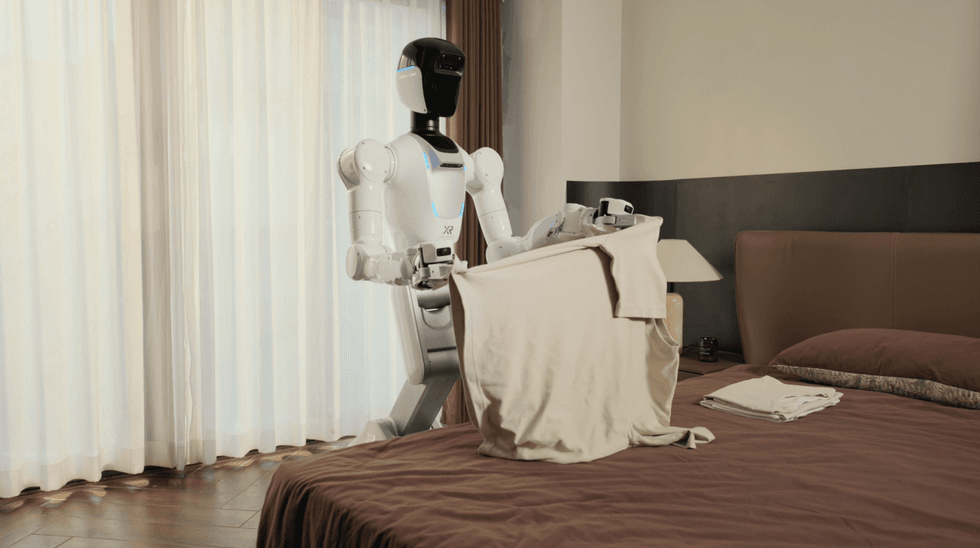
Robotics presents a promising solution to the challenges posed by heavier, more robust solar modules. By automating the handling and installation process, robots can overcome human physical limitations and regulatory weight restrictions, enabling the use of larger, thicker modules that offer superior protection against hail and other hazards.
Oudheusden envisions a future where companies like NextPower, Array Technologies, and GameChange Solar integrate module frame design with robotic installation systems. This integration could enhance installation precision and repeatability, much like robotics has improved manufacturing quality. While electrical connections will still require skilled electricians, synchronizing mechanical and electrical assembly through robotics could streamline the entire process.
He also points out a critical gap in hail protection strategies. Current reliance on hail stow mechanisms overlooks that approximately 50% of the continental United States is vulnerable to hail damage. Without broader solutions, many commercial rooftops, carports, and residential systems remain at risk.
Prioritizing Early Risk Assessment in Project Development
Oudheusden emphasizes the necessity of establishing a comprehensive risk profile at the earliest stages of project development, ideally before mergers and acquisitions. Early risk assessment empowers stakeholders to negotiate better terms and make informed decisions regarding engineering, procurement, and construction (EPC) contractors.
Since EPC choices largely determine the selection of trackers, modules, and inverters-key factors influencing project risk-addressing resilience upfront is crucial. “The majority of risk is locked in when the EPC is selected,” Oudheusden notes. He advises developers and investors to prioritize resilience considerations from the outset to safeguard long-term project viability.
By integrating these strategies-advanced load analysis, tailored mounting solutions, robotic installation, and early risk profiling-the solar industry can significantly enhance the durability and performance of PV systems in the face of increasingly frequent extreme weather events.