Innovative Robotics in Action: Highlights from Recent Developments
Each week, the robotics community witnesses remarkable advancements showcased through captivating videos and events. Below, we explore some of the most exciting robotic innovations, from stair-climbing vacuums to humanoid athletes, and cutting-edge lunar rovers to biohybrid systems. These breakthroughs not only demonstrate technological prowess but also hint at the future integration of robots into everyday life and specialized fields.
Robot Vacuums Conquering Stairs: A New Frontier
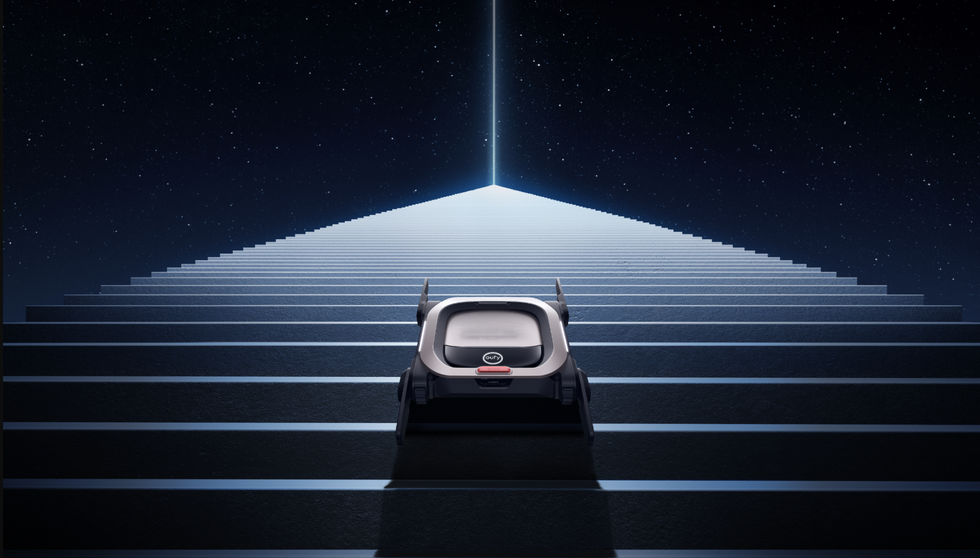
Robotic vacuum cleaners have traditionally been limited to flat surfaces, but recent prototypes are now capable of ascending stairs, expanding their usability in multi-level homes. For instance, Eufy’s latest model demonstrates impressive stair-climbing capabilities, overcoming a significant barrier in autonomous home cleaning technology. This advancement could revolutionize household maintenance, especially in larger residences.
Wall-Climbing Robots: Inspired by Nature
At ICRA 2024, Paul Nadan introduced the LORIS robot, which mimics gecko-like adhesion to scale vertical stone surfaces. This technology leverages advanced materials and control algorithms to enable robots to cling and maneuver on uneven, vertical terrains. Such capabilities open doors for applications in inspection, search and rescue, and maintenance in challenging environments.
Optimizing Household Tasks with Humanoid Robots
Humanoid robots are evolving beyond simple locomotion to perform complex household chores efficiently. Figure’s latest humanoid robot demonstrates optimal dishwasher loading, surpassing human efficiency by strategically arranging dishes to maximize space and stability. This reflects a broader trend where robots are designed to complement human activities by enhancing precision and speed.
Humanoid Table Tennis: A Test of Agility and Precision
Table tennis presents a unique challenge for robots due to the need for rapid perception, prediction, and action at ball speeds exceeding 5 meters per second. Researchers at Hybrid Robotics have developed a hierarchical control framework combining model-based planning and reinforcement learning to enable humanoid robots to compete in this fast-paced sport. This breakthrough highlights progress in dynamic interaction and real-time decision-making.
Biohybrid Robotics: Merging Biology and Technology
Biohybrid robots, which integrate living tissues with synthetic components, hold promise for enhanced adaptability and efficiency. However, current systems often remain confined to controlled laboratory environments and lack robustness for real-world applications. The HyBRIDS initiative, supported by DARPA, aims to overcome these challenges by developing integrated designs that outperform traditional robots, potentially transforming fields like medical devices and environmental monitoring.
Lunar Exploration Robots: Surviving Harsh Extraterrestrial Conditions
Robotics will be pivotal in upcoming lunar missions, especially for tasks during the prolonged lunar night lasting approximately 14 Earth days. The SAMLER-KI project, a collaboration between Germany’s University of Applied Sciences Aachen and the German Research Center for Artificial Intelligence, focuses on developing a semi-autonomous micro rover capable of enduring extreme conditions such as dust, radiation, and vacuum. This rover’s compact design and resilience are critical for sustained lunar exploration.
Robotic Strength and Dexterity in Disaster Response
ARMstrong Dex, a human-sized dual-arm hydraulic robot developed by the Korea Atomic Energy Research Institute, exemplifies robotic strength and precision. Capable of lifting its own weight and manipulating objects up to 50 kg, it performs demanding tasks such as sawing thick wooden beams with fine control and repetitive force application. Such robots are invaluable for hazardous environments where human safety is a concern.
Assistive Robotics Enhancing Quality of Life
Innovations at Carnegie Mellon University are enabling robots to assist individuals with neurological conditions like stroke, multiple sclerosis, and dementia. These robots facilitate essential daily activities such as eating, washing, and dressing, promoting independence and improving quality of life. This technology represents a significant step toward socially assistive robotics tailored to human needs.
Advanced Additive Manufacturing with Robotic Arms
Caracol’s integration of KUKA robotic arms with modular extruders and proprietary software enables the production of large-scale industrial components with high precision. This approach supports sectors such as aerospace, marine, automotive, and architecture by streamlining manufacturing processes and enhancing customization capabilities.
Robotics Conferences and Events to Watch
- ACTUATE 2025: September 23-24, San Francisco
- CoRL 2025: September 27-30, Seoul
- IEEE Humanoids 2025: September 30 – October 2, Seoul
- World Robot Summit 2025: October 10-12, Osaka, Japan
- IROS 2025: October 19-25, Hangzhou
- ICRA 2026: Upcoming event details available online
Reflecting on Space Exploration: The Voyager Legacy
On June 6, 1990, NASA’s Jet Propulsion Laboratory hosted an event to celebrate Voyager’s planetary explorations, unveiling the iconic “Solar System Family Portrait.” This mosaic, featuring six of the eight planets, was a collaborative effort involving Ed Stone and Carl Sagan, whose contributions to science communication remain influential. The “Blue Dot” segment, a poignant reminder of Earth’s place in the cosmos, continues to inspire generations.